a review of a review
A couple of years ago, I read Bram Stoker's Dracula for the first time. I'm a lifelong fan of horror movies, Stephen King, and scary stories of all kinds. I'm also always saying things like, "If you like sci-fi, you have to read Dune even though Dune's prose and structure aren't very good, because it's the only way to know where sci-fi comes from."1 But I'd never read Dracula.

I went into it expecting something dense, ornate, and difficult to read - something Victorian, in other words - and instead found an epistolary page-turner I couldn't put down about the ultimate ride-or-die, her moron fiancé and three large adult sons, and their dutch professor.
It was amazing, I couldn't believe I'd let it take me so long to get around to it, and I found myself thinking What other classics really are that good? All the hubbub in the lead-up to the release of Emerald Fennell's "Wuthering Heights" (2026)2 made Wuthering Heights (1847) an obvious choice, and it didn't disappoint.

Everyone should read Wuthering Heights. But this isn't a review of Wuthering Heights, it's a review of a review of "Wuthering Heights," a movie I haven't seen: Haley Stewart's "Please, let me save you from "Wuthering Heights.""
Sexy, Horrible, Devastating
Stewart's online writing career began and came of age on the fringes of the late 00s/early 10s tradcathwife blogosphere (a space and era you might call "the Great NFP Wars"). While she herself has never quite been a tradcath, a tradwife, a right-winger, or even an exceptionally prudish viewer (she's written positively about very sexually explicit shows like Bridgerton), her somewhat conservative religious perspective may dispose her to be acutely critical of portrayals of sexuality in media. I think it's fair to say Stewart was never going to be a fan of a film that combines repulsion, degradation, and eroticism without repudiation or counterpoint:
Sex in Emerald Fennell’s “Wuthering Heights” is off-putting, grotesque, and always degrading, particularly for the female partner. As in the opening scene, sexual arousal is presented as dangerous and connected with death. Here sexuality is destructive, tainted with domination of men over women, and full of stomach-churning kink. [...]
But even Cathy’s sexual relationship with her husband, Edgar, who may be the only well-adjusted and kind character in the film, is tainted by domination and a sense that her body is being used by a man as she disassociates, rather than two spouses sharing a joyful sexual encounter.
This vein of criticism makes up the bulk of her review;3 more interesting to me were her two non-sex-related critiques of the film.
Nelly Dean
Fennell's stated intention for her adaptation was "to make something that made me feel like I felt when I first read it [as a 14-year-old], which means that it's an emotional response to something. It's, like, primal, sexual. ... It's completely singular. It's so sexy. It's so horrible. It's so devastating." She even included things she thought she remembered reading in the book; her goal wasn't so much to adapt the novel as to put her teenage experience of reading it to film.
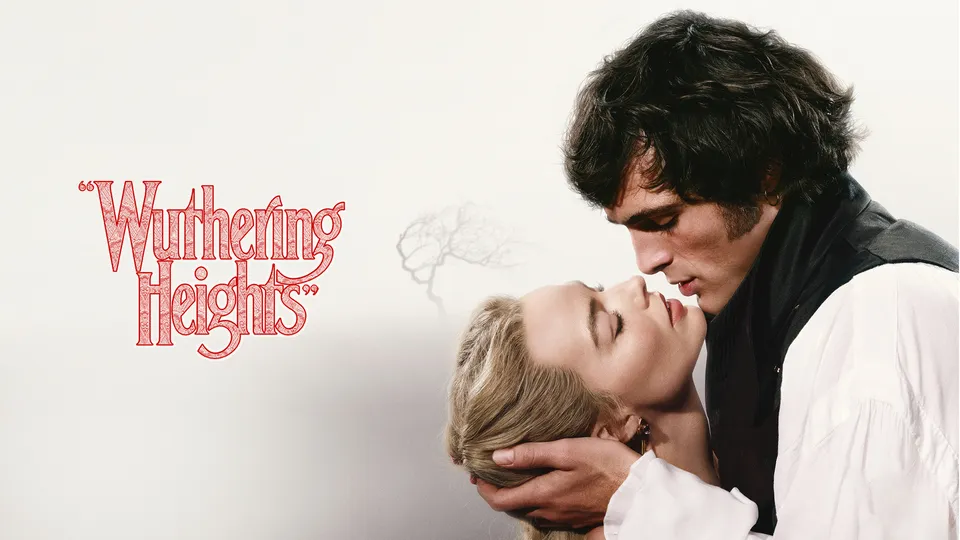
In Stewart's assessment, many of Fennell's changes "serve to make the two main characters more sympathetic and presented as lovers who are thwarted by fate than two very messed up, immature, traumatized people who would not have been happy together, no matter the circumstances." She calls out the film's portrayal of Cathy's childhood companion and household servant, Nelly Dean: "one of the only decent and primarily genuine characters in the novel, is presented as acting in petty and self-serving ways that intentionally cause Cathy pain."
Stewart's critique of the movie's use of sex is a matter of taste and moral perspective; regarding Nelly I think she's at least partly wrong. Brontë's Nelly is petty as hell - an all-time example of the archetypal tattletale, relishing every opportunity to pinky promise not to tell mere moments before turning around to narc.4 The novel's framing device is her eagerness to spend literal weeks gossiping about her former masters and neighbors.
But Nelly's intentions are noble; she's loving, and her ability to clearly see and acknowledge others' flaws is the catalyst that ultimately restores relationships of respect among them.5 Reasonable readers may disagree on how deliberately self-serving and hurtful Nelly's actions are, but it would be very hard to make the argument that they didn't serve her or cause the various Lintons and Earnshaws and Heathcliffs around her (virtually all of whom Nelly dislikes or outright hates) a great deal of pain.
To esteem, to be esteemed
Apparently, nearly all adaptations of Wuthering Heights exclude the entire second half of the novel, ending on the tragic note of Cathy making herself so sick she dies to get attention.6 Stewart is right in her assessment that this choice is deranged, fucks up the entire point of the work, and "makes the story one of complete despair."
Brontë's novel is a cautionary tale about narcissistic and toxic relationships. [...] Cathy and Edgar’s daughter (irritatingly also named Cathy) and Hindley and Frances’ son Hareton break the cycle of toxic obsession, control, and revenge.
Following Cathy's death, Wuthering Heights: the Next Generation seem condemned to their parents' fates. Cathy's nephew Hareton, stolen into Heathcliff's care, is shamed, denied education, and discouraged from learning even basic hygiene or manners. Heathcliff’s son Linton lives his brief life in a state of monstrous brattiness. Cathy Jr., initially a good-hearted child, is imprisoned and forced to marry Linton; trapped and abused, she "[makes] up her mind to enter into the spirit of her future family, and draw pleasure from the griefs of her enemies" (Brontë, 217).
But even before that, Young Cathy could be prejudiced and prone to rash judgment, a trait she learned not from Heathcliff but another member of her parents' generation, her childhood nanny: Nelly, so quick to write others off as permanently degraded. Even poor Hareton, raised by Nelly from infancy to early childhood, is consigned to the trash heap with a shrug when next Nelly meets him and sees the state of ignorance and selfishness to which he's been reduced. His every attempt to defend Young Cathy and impress her with some hard-earned speck of self-improvement is rebuffed with by her disdain or disgust.
Gossip and rash judgment are no small sins; they destroy the reputation of one's neighbor and deprive them of the honor which is the social witness of human dignity.7 Nelly, blind to her own participation in Heathcliff's systematic denial of Hareton's dignity, unerringly spots its reflection in Cathy's treatment of him. Nelly's eventual defense of Hareton8 turns the tide of Cathy's heart; she finally reciprocates his hopeful, outstretched hand.
[Hareton] was not to be civilized with a wish; and my young lady was no philosopher and no paragon of patience; but both their minds tending toward the same point - one loving and desiring to esteem, the other loving and desiring to be esteemed - they contrived in the end to reach it. (Brontë, 239)
In truncating Brontë's work, Fennell and other adaptors cut out its heart. As Stewart says, the first half of the novel "is un-put-down-able because as readers, we cannot look away from the characters blowing up their own lives." It's compelling as hell, but ending it there leaves us only an experience of "toxic obsession, control, and revenge," with no hint of the first tentative shoots of healing Brontë so deftly reveals in the final pages. Young Cathy nearly loses herself to that cycle; it's Hareton's irrepressible urge to grow and to be seen growing that breaks them all free.
⁺✧₊⁺
sci-fi fans also need to listen to gustav holst's the planets in its entirety, because it's the only way to know where sci-fi music comes from. (unlike dune, the planets is also extremely good on its own merits.)↩
I will be distinguishing "the film" from the book with Emerald Fennell's "" styling.↩
while I don't think the kind of imagery she describes is necessarily without artistic merit or requires a hays code moral of the story at the end, I'm actually intensely icked out by it. unless someone else tells me stewart's wrong and there's not actually much of it in "wuthering heights" I won't be watching. happy for anyone who appreciates that stuff! just 100% not for me.↩
this, too, is a Type of Guy we all knew in high school.↩
at least, according to nelly. the reader never gets a neutral perspective on the story - almost the entire epic tale comes to us through nelly's reminiscences to a weird guy who is, essentially, her new boss. if you walk away from it thinking nelly's the novel's real protagonist, driving everyone's character growth forward to the novel's climactic resolution, well. that is more or less the impression a petty lil self-serving self-righteous snitch would want to give, isn't it?
(my own interpretation of nelly isn't that cynical - I think she's fundamentally decent, and clearly the least flawed of the novel's main characters - but if you transplanted her into a novel not about the worst psychos you ever met blowing up their own lives, she would be a deeply annoying little side villain in the style of lady catherine de bourgh or mary bennet.)↩technically she dies shortly after childbirth having been weakened by a "brain fever," but this is more or less textual: cathy threatens to kill herself and/or loudly wishes for her own death to punish the men in her life every couple of chapters and the brain fever is brought on by locking herself in her room and refusing food for three days to get back at her husband for not wanting her toxic situationship hanging around the house.↩
catholic catechism ¶2479↩
a defense that comes in the form of criticizing cathy's flawed behavior, naturally.↩